
Innovative Leadership Comprehensive Leadership Development Programs
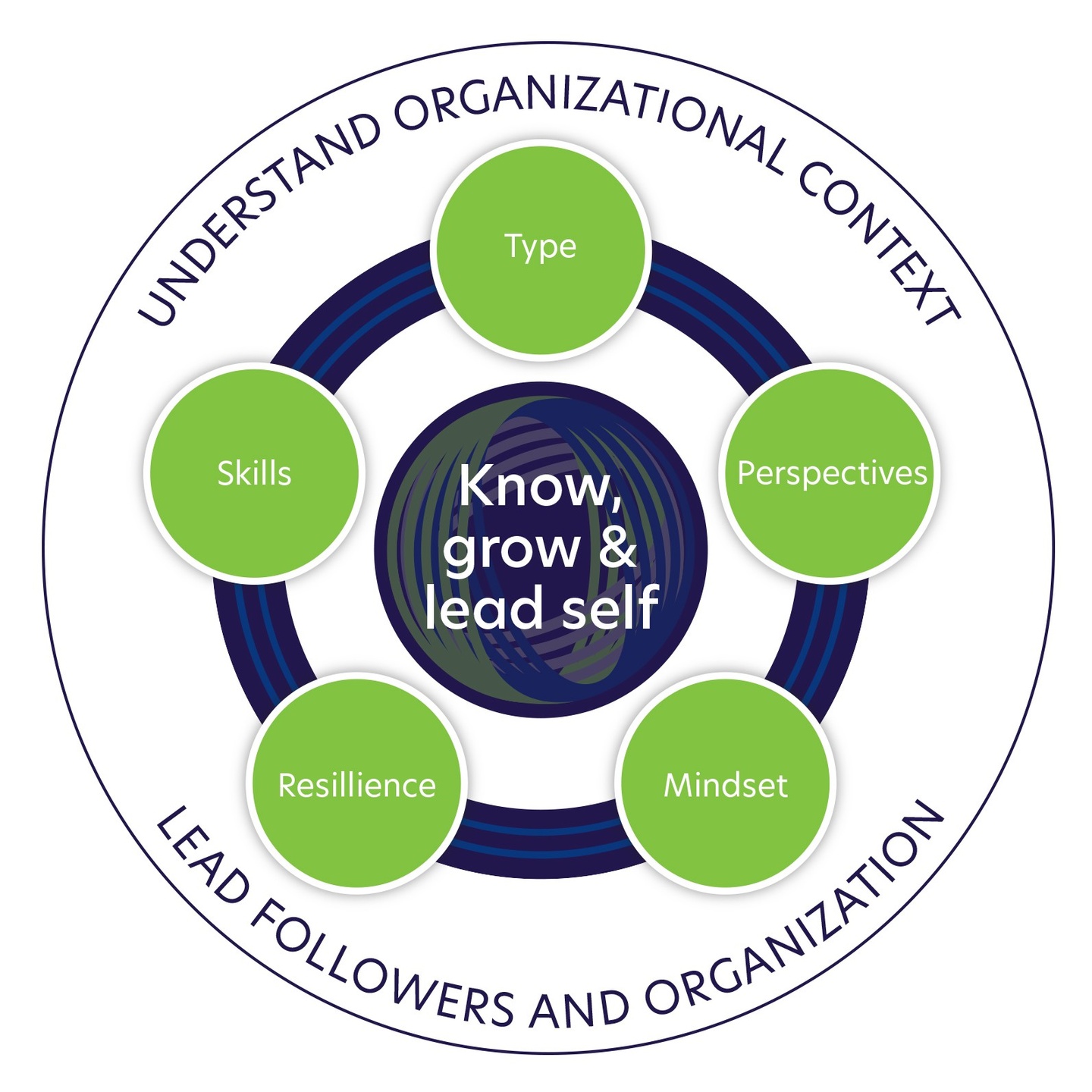
The Innovative Leadership, comprehensive essentials program, is built on the proven Innovative Leadership framework published in eleven award-winning books. These books and chapters included in other leadership texts are used in universities and corporations across the globe.
The facilitated course options include a joint certification from the Innovative Leadership Institute and Franklin University.
Program Comparison Overview

Innovative Leadership Comprehensive Programs
Curriculum: Comprehensive Leadership Development
Program Description
This program is a leadership development and succession-readiness experience designed for high-potential leaders and intact leadership teams preparing to assume broader enterprise responsibility. It is explicitly structured to accelerate leadership maturity, strategic judgment, and organizational impact in complex, volatile, and technology-disrupted environments.
The program moves beyond skill acquisition to focus on leadership capability formation—how leaders think, decide, influence, and design systems under uncertainty. Participants are expected to operate as experienced professionals and are assessed on the quality, defensibility, and integration of their leadership judgments, not on participation or self-expression alone.
Purpose and Distinguishing Features
This program prepares participants to:
- Transition successfully into higher-level leadership roles with expanded scope, ambiguity, and consequence.
- Function as elite leadership teams, capable of coordinated sense-making, decision-making, and execution across organizational boundaries.
- Demonstrate measurable leadership maturity aligned to enterprise needs rather than personal style preferences.
The curriculum is grounded in four integrated frameworks:
- Leadership maturity progression, emphasizing shifts in identity, perspective, and responsibility as leaders “grow up and out.”
- Future-oriented leadership mindset competencies that address the demands of VUCA conditions, AI-driven organizational and workforce transformations, digital transformation, and human–technology collaboration.
- Applied executive development pathways, linking self-awareness to organizational design, strategy execution, and sustained value creation.
- Integral theory, ongoing alignment of the four domains of individual and organizational life, leaders' self-awareness, leader behavior, organizational culture, organizational structure, systems, and processes.
Learning Philosophy
The program emphasizes deeper self-knowledge as a leader of others and organizations, not introspection for its own sake. Self-assessment data are treated as leadership intelligence to be:
- Analyzed for patterns and constraints
- Evaluated against enterprise-level leadership requirements
- Integrated into actionable leadership strategies
Participants are expected to translate insight into observable leadership behaviors, system interventions, and organizational results.
Contextual Relevance
The curriculum explicitly addresses:
- Leadership under VUCA conditions
- The implications of rapid technological change and AI-enabled work
- Shifting expectations of leadership authority, accountability, and influence
- The necessity for leaders to design anti-fragile teams and organizations
Program Learning Outcomes
By the end of the Innovative Leaders’ Program, participants will be able to:
- Synthesize a defensible definition of innovative leadership for their work context and justify when it outperforms other leadership approaches under volatile, uncertain, complex, and ambiguous conditions.
- Evaluate their current leadership effectiveness using validated diagnostic inputs (e.g., role success indicators, mindset assessments, stakeholder signals) and prioritize the highest-leverage development targets against role requirements and enterprise strategy.
- Design an evidence-based leadership development plan that integrates vision, values, strengths, risks, resilience practices, and measurable behavior-change experiments aligned to one’s next-role expectations.
- Demonstrate advanced leadership communication and conflict capability by creating and executing a high-stakes conversation plan (initiate, align, resolve) that improves outcomes while preserving trust and accountability.
- Integrate learning into a portfolio of executive artifacts and defend the impact/ROI of their leadership changes using credible indicators (team outcomes, stakeholder feedback, decision quality, execution results).
What This Leadership Development Program Requires of You
There are 8 modules. Each module is explicitly limited to achieving defined program learning outcomes. Activities, worksheets, and reflections are not ends in themselves; they function as analytic tools to support diagnosis, judgment formation, and executive decision-making.
Participants should expect to:
- Examine their leadership through evidence, not intention
- Make and test leadership changes in real work conditions
- Receive challenge and support from peers and facilitators
- Produce executive-level artifacts that demonstrate readiness for greater responsibility
This program mirrors the rigor of postgraduate executive education and aligns with executive education best practices and accreditation expectations (e.g., HLC, AACSB, IACBE).
- Out of Class Time Commitment:
- Sessions 1–4: ~2–3 hours/week
- Sessions 5–8: ~2 hours/week
- Active experimentation: You will test leadership behaviors in your role—not simulations alone.
- Evidence-based thinking: Assertions must be supported by data, observation, or outcomes.
- Peer accountability: Learning partners are expected to challenge, not affirm.
Discomfort is normal. Leadership development at this level involves unlearning habits that previously brought success.
This page provides access and enrollment information for an Innovative Leadership Institute online program.
Learn more about Innovative LeadershipLeaders who build the essentials join the elite cadre of Innovative Leaders! They are equipped to manage in today's complex environment.
